

Welcome to Myllymaa Energy
Cut the Middleman. Direct from Manufacture to Your Roof.
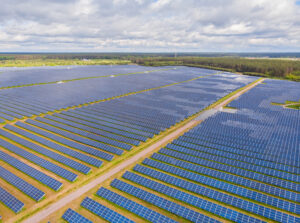
Most solar providers buy through wholesalers, distributors, and brokers—with every step adding to your final bill. At Myllymaa Energy, we strip away the excess. We source high-efficiency, tier-1 solar panels directly from the manufacture, delivering maximum energy savings to your property at the true factory cost.
Why Choose Myllymaa Energy?
-
Direct Factory Pricing: By eliminating middleman markups, we pass 100% of the distribution savings straight to you.
-
Tier-1 Quality Assurance: Sourcing directly means we have complete oversight of manufacturing standards, ensuring you receive the latest, highly durable photovoltaic (PV) technology.
-
Engineered for Harsh Climates: Our premium panels are explicitly tested to withstand heavy snow loads, ice, and low-light winter environments, providing stable returns for decades.
-
Uncompromised Warranties: Dealing directly with the manufacturing line allows us to offer robust, multi-decade performance guarantees with zero administrative runaround.
The Power of Modern Solar Technology
Solar energy isn’t just about being green—it’s a high-yield financial investment. Modern solar cells utilize advanced semiconductor materials to convert raw sunlight into usable AC power for your home or business through a highly efficient inverter.
The Financial & Environmental Impact
| Advantage | What It Means for You |
| Drastic Bill Reduction | Instantly lower your grid dependency and lock in stable, predictable energy costs for the next 30+ years. |
| Rapid Payback Period | Thanks to factory-direct pricing, your system pays for itself much faster than traditional retail solar packages. |
| Increased Property Value | Solar infrastructure actively boosts your building’s market equity while the financial returns remain entirely tax-free. |
| Zero-Emission Footprint | Generate clean, renewable energy completely independent of fluctuating fossil fuel markets. |
Our Seamless Direct-to-Roof Process
We make transitioning to self-sufficient energy entirely stress-free by handling the entire pipeline.
Ready to claim your factory-direct savings? Don’t pay retail prices for wholesale technology. Let our energy specialists build a custom quote for your property today.
SMALL MODULAR REACTOR (SMR)
This is an example of what we can provide now.
IMPPORTANT READ TEXT IN YELLOW BELOW!
Reliable Clean Energy for Industrial and Remote Applications
Executive Summary
Small Modular Reactors (SMRs) represent the next generation of nuclear energy technology. Their compact design enables safe, reliable, carbon-free electricity and heat production for locations where traditional large nuclear power plants are not practical. Factory manufacturing reduces construction time, improves quality control, and allows deployment in remote regions, industrial developments, mining operations, and large infrastructure projects.
—
Technical Specifications
Reactor Type: Integral Pressurized Water Reactor (PWR)
Thermal Output: 175 MW(th)
Electrical Output: Approximately 55 MW(e)
Reactor Height: 7.3 meters
Reactor Diameter: 3.3 meters
Reactor Weight: Approximately 148 tonnes
Operational Lifetime: 40–60 years
Fuel Type: Low-enriched uranium
Typical Refueling Interval: Every 6–10 years
Capacity Factor: Greater than 90%
—
Safety Features
The reactor incorporates modern Generation III+ nuclear safety technology, including passive and active safety systems, an integrated reactor vessel, multiple redundant protection systems, and engineered safety features designed to ensure reliable operation even under challenging conditions. Its compact integral design reduces the number of external piping systems and improves overall safety and reliability.
—
Key Advantages
Continuous 24-hour electricity production
Zero carbon emissions during operation
High reliability and availability
Compact installation footprint
Long operational life
Long intervals between refueling
Reduced fuel transportation requirements
Suitable for isolated electrical grids
Factory-built modular construction
Capable of operating in extreme climates, including Arctic and desert environments
—
Potential Applications
This technology is suitable for powering:
Large construction projects
Mining operations
Oil and gas facilities
Remote communities
Smart cities
Industrial parks
Data centers
Hydrogen production facilities
Water desalination plants
Ports and logistics hubs
Military and government installations
Island power systems
—
Economic Overview
The estimated capital investment for one reactor unit is approximately US$300–400 million, depending on project location, civil works, infrastructure, licensing, and local regulatory requirements.
Estimated construction cost is approximately US$6,000 per installed kilowatt, making it competitive with other advanced nuclear technologies for long-term baseload electricity generation.
Although the initial investment is significant, operating costs remain relatively low because fuel consumption is minimal and refueling is required only every several years.
—
Environmental Benefits
Small Modular Reactors produce electricity without greenhouse gas emissions during normal operation. They provide reliable baseload power independent of weather conditions and can significantly reduce dependence on fossil fuels while supporting industrial growth and energy security.
—
Conclusion
Small Modular Reactor technology provides a practical, long-term solution for clean, reliable, and continuous energy production. With approximately 55 MW of electrical output, decades of operational life, and long refueling intervals, it is well suited for industrial developments, remote infrastructure, mining projects, desalination plants, hydrogen production, and future smart city developments. Its combination of compact size, advanced safety systems, and high reliability makes it one of the most attractive options for dependable carbon-free energy where conventional power generation is difficult or expensive.
For a country to purchase and operate a Small Modular Reactor (SMR), several major requirements typically must be met. These vary by supplier country and reactor design, but generally include:
1. Nuclear Regulatory Authority
The country needs an independent nuclear regulator that can license, inspect, and oversee nuclear facilities.
2. International Agreements
Membership in the International Atomic Energy Agency.
A safeguards agreement with the IAEA.
Compliance with international nuclear non-proliferation obligations.
3. National Nuclear Legislation
Laws governing nuclear safety, security, liability, emergency preparedness, and radioactive waste management.
4. Site Approval
Environmental impact assessments.
Geological, seismic, and flood risk studies.
Approval of a suitable site.
5. Security Requirements
Physical protection against theft or sabotage.
Cybersecurity measures.
Emergency response capabilities.
6. Grid Infrastructure
An electrical grid capable of integrating the reactor’s output, or a dedicated industrial microgrid if the SMR serves a specific facility.
7. Waste Management Plan
A strategy for storing and ultimately disposing of spent nuclear fuel and radioactive waste.
8. Qualified Workforce
Trained reactor operators, engineers, maintenance personnel, radiation protection specialists, and emergency response teams.
9. Financing
Depending on the reactor and supplier, the project may require several hundred million dollars to over a billion dollars, including infrastructure and licensing.
10. Supplier Approval
The exporting country must approve the sale. This is often subject to export controls, geopolitical considerations, and international sanctions.
More info at: https://www.iaea.org/